Gentle Sort / Features
Estate documents
Four PDF reports, made from the list your family has already built. Each one is ready to hand to an executor, attorney or accountant.
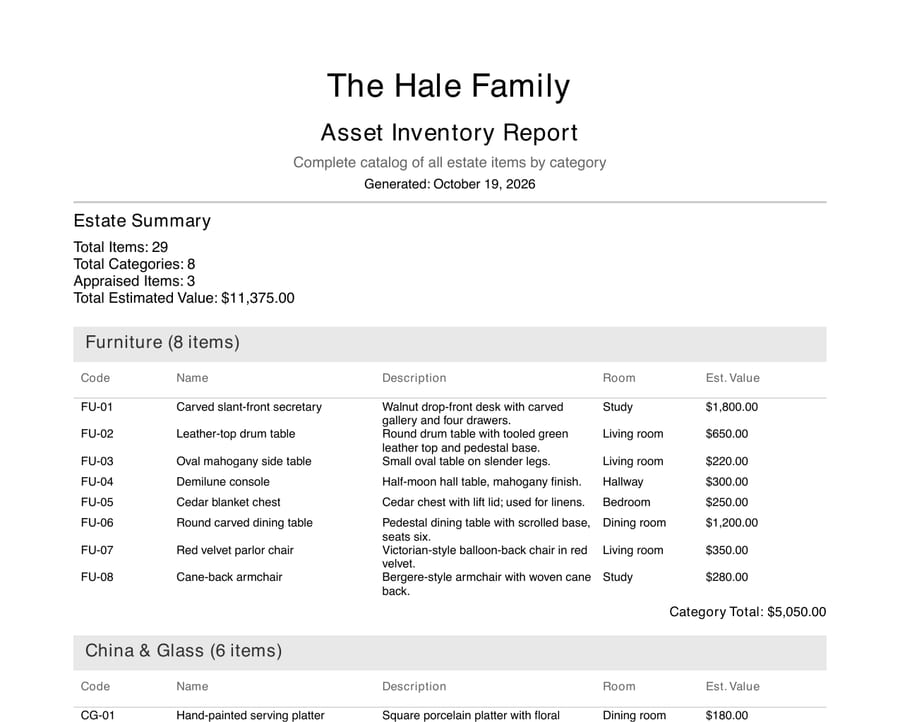
Asset inventory
Every item in the estate, by category, with its code, description, room and value. Appraised items are marked, and each category has a subtotal.
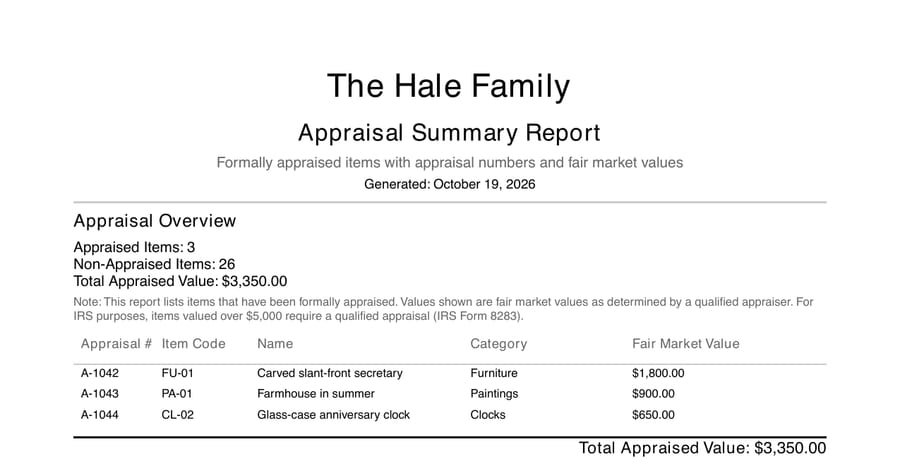
Appraisal summary
Only the formally appraised items, with appraisal numbers and fair market values, plus notes on the IRS thresholds for Form 8283 when items are donated.
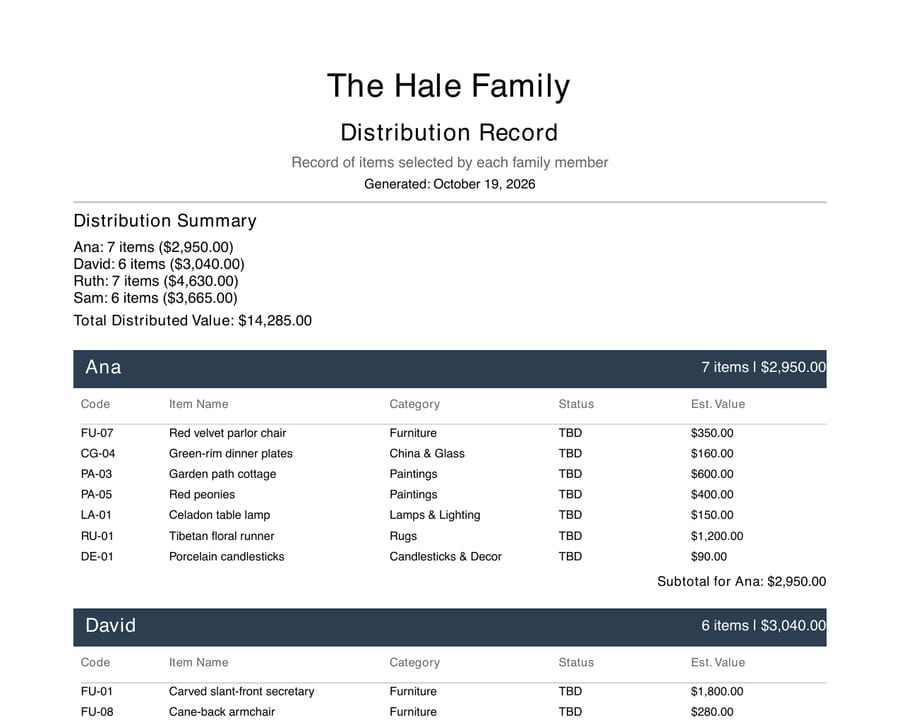
Distribution record
Who received what. Each person’s items with values and a subtotal, so everyone can see the division was even, and shared items are marked.
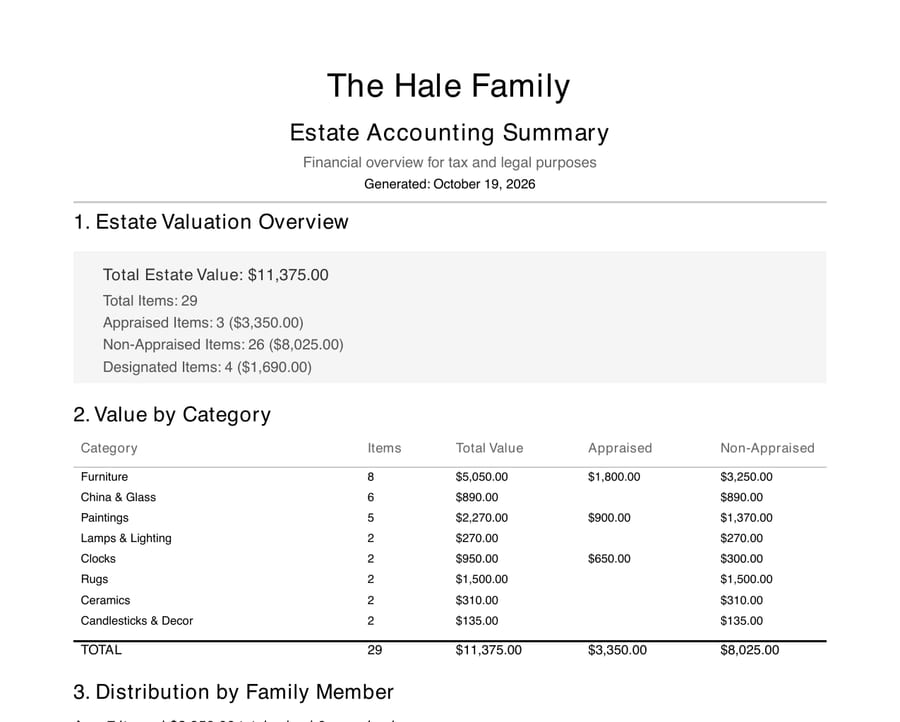
Accounting summary
The estate’s total value by category and by beneficiary, with state and federal tax notes and a page for the executor to sign.
Insuring what you inherit
Insurance companies want proof of what you own and what it’s worth. The record your family builds while dividing the estate is that proof, and you keep it afterward.
-
Proof for every piece
Photos, a description and where each item is now, whether that’s your living room or box 14 in storage.
-
What it’s worth
Each item keeps its appraised or estimated value. AI estimates point out jewelry, art or silver that deserves a professional appraisal and its own line on your policy.
-
A list for your agent
Reports with photos and values are ready to send to your insurance agent, and a copy is kept online, away from the house.
Estate appraisals usually give fair market value. Insurers usually want replacement value, which is often higher. For valuable pieces, ask your appraiser for both.
What to do with the things no one is keeping.